
What Actually Changes in the Brain During EMDR
People often ask the same question when they first hear about EMDR:
“But what does it actually do to the brain?”
They’ve tried talking about the same issues for years.
They understand their patterns.
They know where things come from.
And yet their body still reacts.
EMDR is different because it doesn’t just create insight.
It changes how the brain stores and responds to memory at a neurological level.
The Brain Under Stress: Why Talk Therapy Often Isn’t Enough
When something overwhelming happens, the brain doesn’t always process it in a linear, integrated way.
Instead, memory can become “stuck” in a state that includes:
emotional charge
body sensation
fear response
and survival-level meaning
These memories don’t live like normal past events.
They live as present-moment threat.
So even when you logically know you’re safe:
your body may still panic
your chest may still tighten
your stomach may still drop
your system may still freeze or brace
This is why insight alone often doesn’t resolve the reaction.
What EMDR Does at the Neurological Level
EMDR uses bilateral stimulation (alternating right–left input through eye movements, tapping, or sound) while the brain briefly accesses a stored memory.
This activates the brain’s natural information-processing system — the same system that integrates memory during REM sleep.
During EMDR:
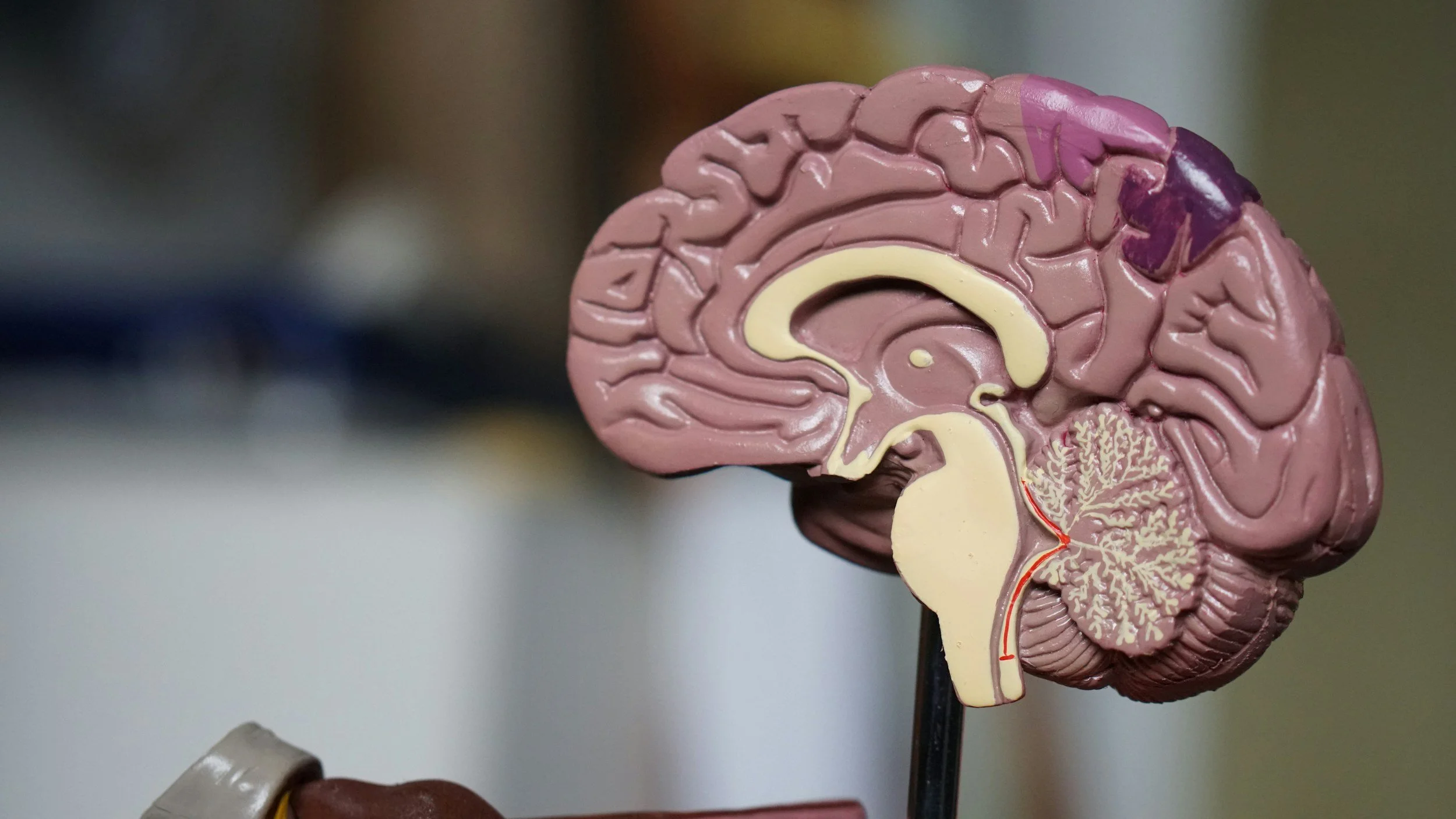
the amygdala (alarm center) calms
the hippocampus (memory integration center) comes online
the prefrontal cortex (reasoning and regulation center) re-engages
Instead of the memory remaining stored as a threat, it becomes stored as:
“This happened, and I survived.”
Not as:
“This is still happening.”
This is the core neurological shift.
From “Live Threat” to “Resolved Memory”
Before EMDR, a traumatic or distressing memory is often stored in the brain as:
fragmented
emotionally charged
body-based
present-tense
After EMDR, the brain re-files that memory into long-term, integrated storage.
What clients often notice afterward:
the memory feels distant instead of vivid
the emotional charge is dramatically lower
the body no longer reacts the same way
their thoughts about the memory shift naturally
triggers lose their power
This isn’t suppression. It’s a re-negotiation to remind your system that you’re here and you’re safe.
Why the Body Changes When the Brain Changes
Because the nervous system and the brain are inseparable.
When a memory is reprocessed in EMDR:
the vagus nerve response shifts
muscle bracing softens
breath deepens
startle reflex decreases
freeze and collapse lessen
baseline anxiety reduces
This is why EMDR often feels profoundly somatic even though it’s a brain-based intervention.
The body finally gets the update that the threat has passed.
How EMDR Differs From “Understanding the Problem”
Many people come into EMDR saying: “I already know why I’m this way.”
That knowledge matters. But understanding and reprocessing are not the same neurological act.
Talking about a memory activates:
language centers
logic
narrative meaning
EMDR activates:
sensory memory
emotional memory
autonomic response
survival circuitry
So instead of just talking about the wound, the nervous system actually resolves it.
The Role of Somatic Awareness in EMDR
In my work, EMDR is paired with a strong somatic focus.
We don’t just track thoughts — we track:
breath
sensation
activation
collapse
micro-shifts in the autonomic system
This helps prevent:
emotional flooding
dissociation
or intellectual bypassing
It also ensures that the brain and body update together — which is where the deepest change happens.
Why EMDR Creates Lasting Change (Not Temporary Relief)
When a memory is truly reprocessed:
your reactions change without effort
your boundaries become clearer
your sense of choice returns
your nervous system stabilizes
your life narrows around what actually fits
Not because you force it.
Because your physiology no longer believes it’s in danger.
You don’t have to “work at” being different.
Your system simply no longer needs the old protection.
EMDR for Nervous System–Driven Patterns
EMDR therapy is especially effective for patterns rooted in the nervous system such as:
chronic anxiety
freeze responses
emotional overfunctioning
relationship reactivity
people-pleasing
panic and hypervigilance
unresolved shock or grief
Because these aren’t thought problems. They’re stored-response patterns.
In-Person in Carmel & Virtual Across California
I offer EMDR both in person in Carmel-by-the-Sea and virtually across California, including Santa Cruz, Monterey, Big Sur, and San Luis Obispo.
If you’re ready to stop managing your reactions and start resolving what’s underneath them, learn more about my work or book a consultation here.
Disclaimer: This blog is for educational purposes only and is not a substitute for professional medical or psychological advice, diagnosis, or treatment. Results from therapy may vary. If you're experiencing mental health issues, consult with a licensed mental health provider near you. Ashley K. Whelan is a holistic psychotherapist in California offering EMDR, somatic therapy, and psychedelic integration for women seeking mind-body-spirit healing. Reading this post does not create a therapist–client relationship. If you are experiencing significant emotional distress, please seek support from a licensed mental health professional.